

What Are AC Contactor Burned Out Symptoms? (And Why They Matter Fast)
The most common ac contactor burned out symptoms homeowners notice are:
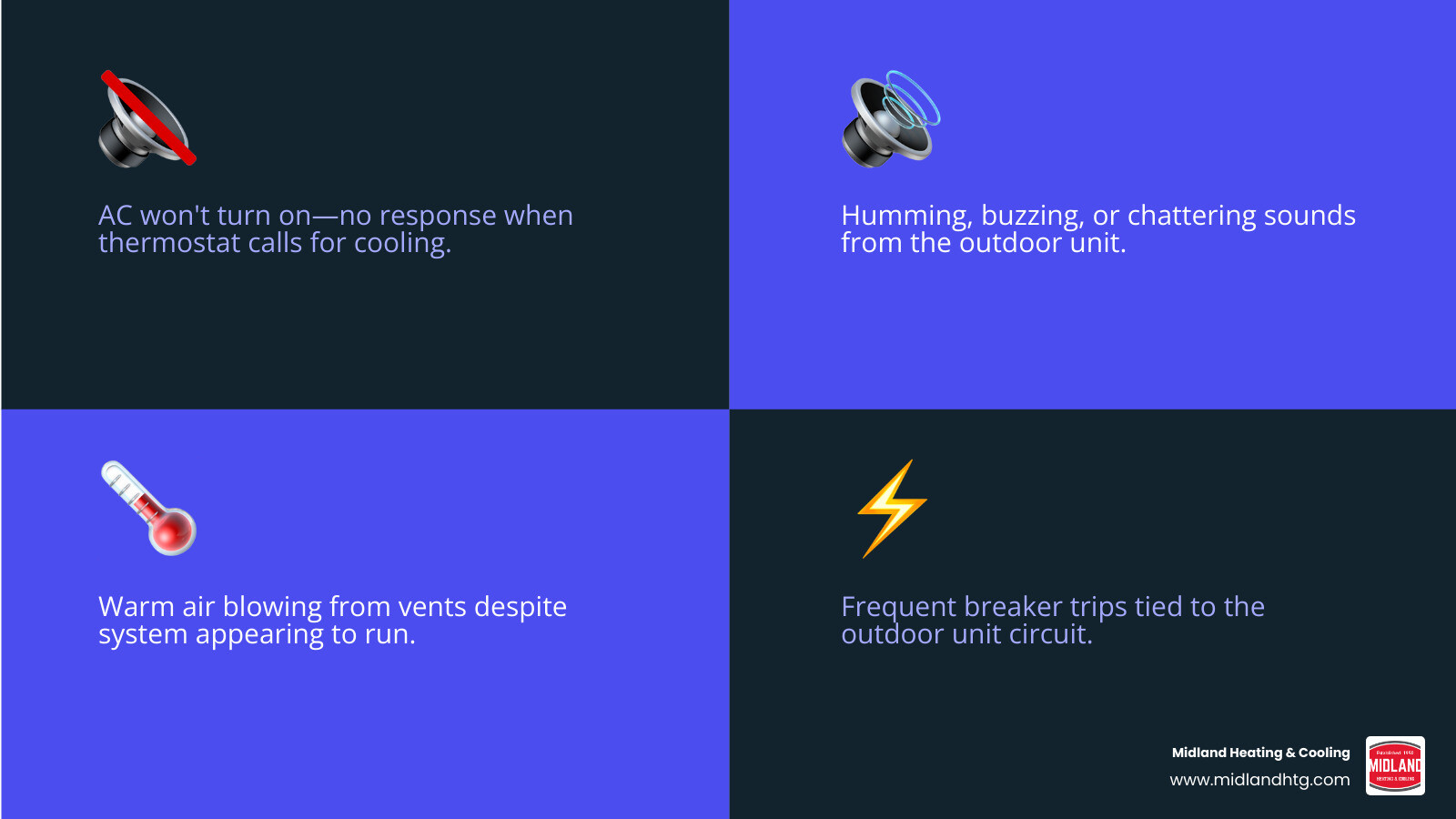
- AC won’t turn on — no response when the thermostat calls for cooling
- AC runs continuously — the system won’t shut off even after the set temperature is reached
- Humming, buzzing, or chattering sounds from the outdoor unit
- Warm air blowing from vents despite the system appearing to run
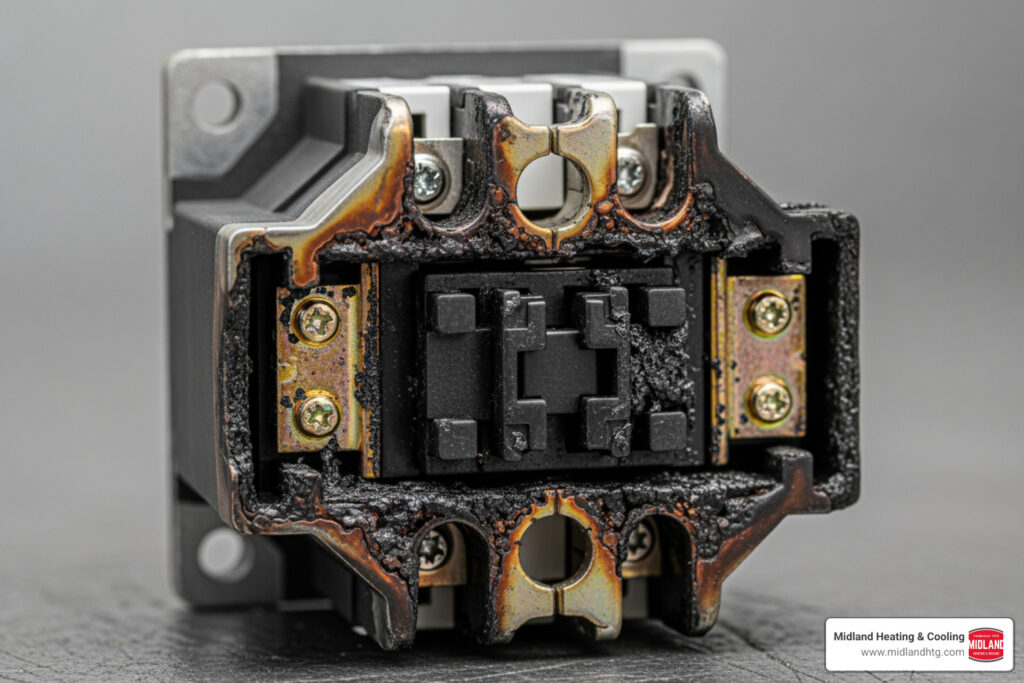
- Visible burn marks, pitting, or melted plastic on the contactor itself
- Frequent breaker trips tied to the outdoor unit circuit
If you’re noticing any of these, your AC contactor may be fried — and the clock is ticking on your compressor.
Your air conditioner works fine all spring, then on the hottest day of a Twin Cities summer, it goes completely silent. No hum. No fan. Nothing. The thermostat is set correctly, the breaker looks fine, and yet — no cooling. In many cases like this, the culprit isn’t the compressor or a refrigerant leak. It’s a small electrical switch called the contactor, and when it burns out, the whole system goes down with it.
The AC contactor sits inside your outdoor condenser unit and acts as the gatekeeper for electrical power. When your thermostat signals that cooling is needed, the contactor closes and sends power to the compressor and fan motor. When it fails — whether from age, electrical surges, or heat — that power never reaches its destination. According to industry data, 68% of compressor failures trace back to a faulty contactor, and if charred contacts go unaddressed, 72% of compressors fail within just 30 days. That’s an expensive outcome from an inexpensive part.
This guide walks Twin Cities homeowners through every burned out AC contactor symptom to watch for, what causes them, and when to call in a professional before a small fix becomes a major repair.
Common AC Contactor Burned Out Symptoms
When we talk about ac contactor burned out symptoms, we are usually looking at a component that is struggling to complete an electrical circuit. Think of the contactor as a drawbridge. When the thermostat (the king) says it’s time for cool air, the bridge should lower, allowing electricity to flow to the compressor and the fan motor. If the bridge is stuck, broken, or charred, the “traffic” (electricity) can’t get through.
One of the first signs many homeowners in Minneapolis or Edina notice is a strange noise coming from the outdoor unit. A healthy contactor makes a single, firm “click” when it engages. If you hear persistent humming, buzzing, or a rapid “chattering” sound, the magnetic coil inside the contactor is likely failing or the contacts are so pitted they can’t maintain a solid connection.
Chattering is particularly dangerous because it causes the power to flicker on and off rapidly. This stresses the compressor and can lead to a total system shutdown. If you hear these noises, it’s one of the Signs Hvac System Needs Professional Repair before the damage spreads.
Another major red flag is when your indoor vents are blowing warm air. You might hear the indoor blower fan running, but if the contactor has failed to send power to the outdoor compressor, no heat exchange is happening. This is a common reason Why Is Ac Not Cooling Properly, and it often leads homeowners to mistakenly believe they are low on refrigerant.
Identifying AC Contactor Burned Out Symptoms Visually
If you are comfortable safely opening the service panel on your outdoor unit (with the power strictly turned off at the disconnect!), you can often see the damage with your own eyes. A “fried” contactor looks exactly like it sounds.
Look for the following visual ac contactor burned out symptoms:
- Pitting: The silver-colored pads (contacts) should be smooth. If they look like the surface of the moon with tiny craters and jagged edges, they have been “arcing.”
- Carbon Deposits: Black, sooty marks around the contacts indicate electrical fires on a microscopic scale.
- Melted Plastic: In extreme cases, the heat generated by a poor connection can melt the plastic housing of the contactor.
- Surface Discoloration: Look for bluish or darkened patches on the metal components, which indicate the unit has reached temperatures exceeding 300°F to 400°F.
- Corrosion: Especially in our humid Minnesota summers, rust or green oxidation can build up, preventing the mechanical arm from moving freely.
Operational AC Contactor Burned Out Symptoms
Beyond noises and smells, the way your AC behaves can point directly to a contactor issue.
Failure to Start This is the most straightforward symptom. The thermostat clicks, you wait for the cool breeze, and… nothing happens outside. If the contactor coil has burnt out, it loses its magnetic pull. Without that pull, the contacts never touch, and the high-voltage electricity stays “parked” at the entrance.
Continuous Running Sometimes, the opposite happens. The contacts can actually “weld” themselves together due to extreme heat and arcing. When this happens, the bridge is stuck in the “down” position. Even when your home reaches 68 degrees and the thermostat tells the system to stop, the compressor keeps chugging away. This is a recipe for a frozen evaporator coil and a massive electricity bill.
Short-Cycling If the contactor is failing but not quite dead, it may engage and disengage sporadically. This causes the outdoor unit to turn on and off every few minutes. Not only is this inefficient, but it’s also a frequent reason Why Ac Circuit Breaker Keeps Tripping. Every time a motor starts, it pulls a “surge” of electricity. If it’s doing this every three minutes because of a shaky contactor, the breaker will eventually get fed up and trip to protect the house.
Inconsistent Cooling If the contactor is providing “dirty” or inconsistent power, the compressor may struggle to maintain the correct pressure. While we always check to Address Low Refrigerant Issues In Ac System, we often find that the refrigerant levels are perfect, but the electrical delivery system is simply failing.
Why Contactors Fail and the Risks Involved
Why does this small part fail in the first place? In the Twin Cities, we see a few recurring themes.
- Normal Wear and Tear: Most contactors are rated for about 100,000 cycles. Over years of Minnetonka summers, those cycles add up. Every time they click together, a tiny spark (an arc) occurs. Over time, these sparks eat away at the metal.
- Electrical Surges: Lightning strikes or fluctuations in the local power grid can “cook” the delicate copper coil inside the contactor instantly.
- Dirt and Debris: Dust, spider webs, and even small insects (like ants or earwigs) can get stuck between the contacts. When the contactor tries to close on a bug, it creates a gap that leads to massive arcing and eventual burnout.
- Excessive Heat: When it’s 95 degrees in Bloomington and your AC is working overtime, the electrical components generate their own internal heat. If the terminals are even slightly loose, that resistance creates a hotspot.
The risks of ignoring these symptoms are significant. As mentioned, Ac Compressor Failures In Summer are often the final stage of a contactor problem. A compressor is the most expensive part of your AC; a contactor is one of the least expensive. Letting a bad contactor “chatter” for a week can essentially vibrate your compressor to death or burn out its internal windings.
Furthermore, there is a legitimate fire hazard. The NFPA reports that faulty contacts contribute to roughly 20% of HVAC-related electrical fires. When metal is pitting and plastic is melting, you are dealing with a fire risk inside your outdoor cabinet.
| Feature | Healthy Contactor | Failing/Burned Out Contactor |
|---|---|---|
| Sound | Single, firm “click” | Humming, buzzing, or chattering |
| Visuals | Smooth, silver contacts | Pitting, black soot, or melted plastic |
| Temperature | Cool or slightly warm to touch | Discolored metal (300°F+) |
| Operation | Starts/stops with thermostat | Won’t start or won’t stop |
| Coil Resistance | Within manufacturer specs | Open circuit or extremely high resistance |
Professional Diagnosis and Maintenance Protocols
When we arrive at a home in St. Paul or Eden Prairie for a service call, we don’t just guess. We use a systematic approach to confirm if the ac contactor burned out symptoms are truly the source of the problem.
First, we check for voltage. We use a multimeter to ensure the 24-volt “signal” is arriving from your thermostat. If the signal is there but the contactor isn’t moving, the coil is dead. We also check the high-voltage side to ensure power is reaching the contactor but perhaps not leaving it.
Next is the continuity check. With the power off, we test the resistance across the contacts. If the contacts are closed but the multimeter shows high resistance, it means the pitting and carbon are blocking the electricity. This is a clear sign the part needs replacement.
We also look at the dual capacitor. Interestingly, 65% of compressor startup failures involve faulty capacitors that are often stressed by a failing contactor. We check the “MFD” (microfarads) rating to ensure the whole electrical team is healthy. If you’re curious about what else we look for, check out our Home Ac Troubleshooting Guide What To Check Before Calling Hvac.
Preventive maintenance is the best way to avoid these headaches. During a standard inspection, our technicians will:
- Clean the magnet faces to ensure a quiet, solid pull.
- Tighten all wire terminals (vibration from the fan can loosen these over time).
- Inspect for any “pests” that have made a home in the electrical cabinet.
- Measure the temperature rise across the contacts.
For a deeper dive into how we keep systems running in our area, see our Minneapolis Ac Repair Ultimate Guide.
Frequently Asked Questions
Can I temporarily run my AC with a bad contactor?
We strongly advise against this. If your contactor is chattering or showing signs of burnout, running the unit puts your compressor at extreme risk. As we’ve noted, 72% of compressors fail within 30 days of contactor charring. It is much safer to shut the system down at the breaker and Request Service immediately. Running a system with a “welded” contactor is even more dangerous, as the unit will not shut off, potentially leading to mechanical failure or an electrical fire.
How often should an AC contactor be inspected for signs of burnout?
In our Minnesota climate, we recommend an annual inspection every spring before the heavy cooling season begins. In high-usage areas or for older systems (10+ years), bi-annual checks are even better. Regular maintenance allows us to catch pitting while it’s minor, before it has a chance to leave you stranded in a heatwave. You can find more maintenance tips in our Minneapolis Ac Repair Ultimate Guide.
Will the AC fan still run if the contactor is fried?
In most modern residential units, the contactor serves as the “on” switch for both the compressor and the outdoor condenser fan motor. If the contactor fails to pull in, neither will run. If the fan is running but the compressor isn’t (or vice versa), you might have a different electrical issue, such as a blown capacitor or a failed motor winding. This is one of those Signs Hvac System Needs Professional Repair because it requires high-voltage diagnostics to determine exactly where the power flow is breaking down.
Conclusion
A burned-out AC contactor might be a small part, but it carries a heavy burden. From the humming and buzzing of a failing coil to the dangerous “welding” of contacts that keep a system running indefinitely, the ac contactor burned out symptoms are your system’s way of asking for help. Ignoring these signs can lead to a catastrophic compressor failure, leaving you with a much larger bill and a very hot home.
At Midland Heating & Cooling, we’ve spent over 70 years serving our neighbors in St. Louis Park, Hopkins, Wayzata, and across the Twin Cities. We understand the specific stresses that Minnesota’s weather puts on your HVAC system. Our certified technicians are experts at diagnosing electrical issues quickly and safely, ensuring your home stays comfortable all summer long.
If you suspect your AC contactor is on its last legs, don’t wait for the heat to move in. Contact us today for expert AC repair in Minneapolis and the surrounding areas. We’ll get your “drawbridge” working again so the cool air can flow freely.