
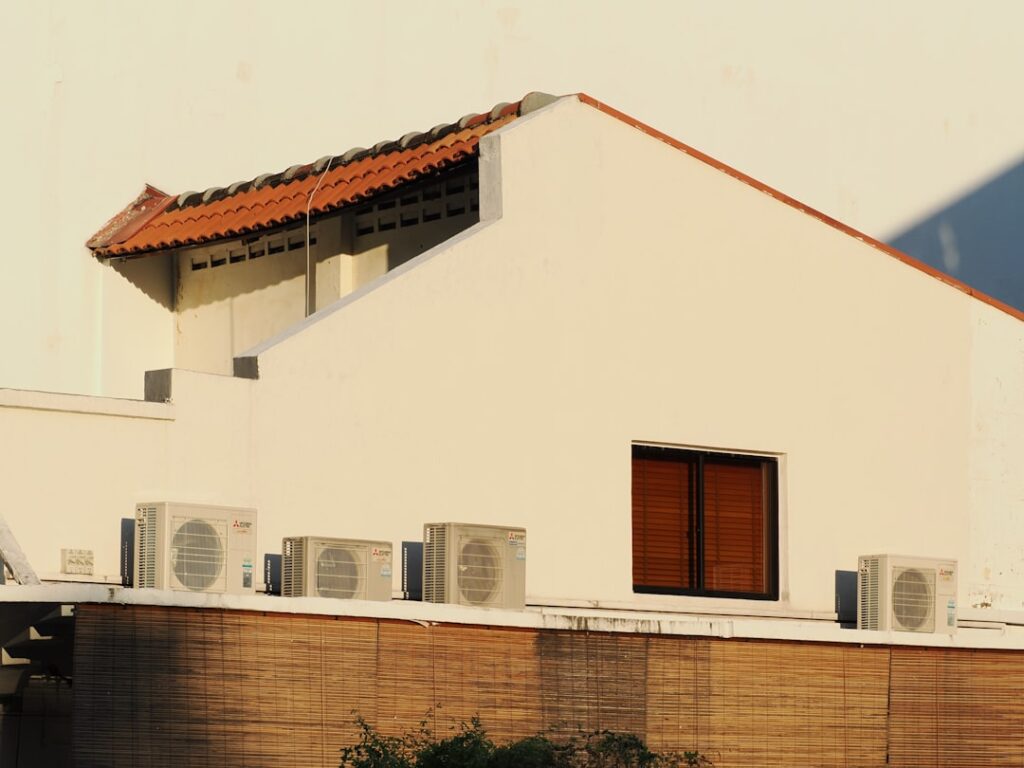
How Long Does a Central AC Actually Last in the Twin Cities?
The average lifespan of a central air conditioner in a Midwest climate like Minnesota is typically 15 to 20 years — but many units show significant wear as early as year 12, especially when exposed to the region’s humidity, temperature swings, and harsh winters.
Here’s a quick breakdown of what to expect:
| Condition | Estimated Lifespan |
|---|---|
| Well-maintained, properly sized unit | 17-20 years |
| Average maintenance, normal use | 15-17 years |
| Minimal maintenance or poor installation | 10-12 years |
| High humidity exposure + heavy summer use | 12-15 years |
If your system is approaching or past the 12-year mark, it’s worth paying close attention — even if it still seems to be running fine.
Most homeowners don’t think about their AC until it stops working, and that’s usually on the hottest day of the year when HVAC technicians are at their busiest. The Twin Cities presents a specific challenge: summers are hot and humid, winters are brutal, and your outdoor unit spends months sitting through freeze-thaw cycles that gradually wear down its components. That combination of seasonal extremes puts more stress on cooling equipment than most national averages account for.
This guide walks you through exactly what affects your AC’s lifespan in Minnesota, the warning signs that your system is aging out, and how to make a smart decision about repair versus replacement before you’re forced into an emergency call.
Understanding the Average Lifespan of a Central Air Conditioner in a Midwest Climate
When we talk about the average lifespan of a central air conditioner in a Midwest climate, we are looking at a system that must be a “jack of all trades.” In a place like Minneapolis or St. Louis Park, your air conditioner isn’t just a luxury; it’s a dehumidifier and a heat-rejection machine that sits dormant for six months only to be asked to run 24/7 during a July heatwave.
Industry benchmarks from organizations like ASHRAE suggest that 15 to 20 years is the standard service life for a central AC unit. However, the “Ohio Swing” — a term often used to describe the extreme temperature fluctuations seen across the Midwest — can accelerate this timeline. In the Twin Cities, we often see units reach a functional “tipping point” at the 12-to-15-year mark.
By this age, the cumulative effect of outdoor exposure and thermal stress begins to manifest as mechanical fatigue. Components like the compressor or the fan motor, which have spent years expanding and contracting with the seasons, may start to lose efficiency. In fact, research shows that by year 12, many systems are operating at only 80% to 85% of their original efficiency.
To ensure your system reaches the upper end of that 20-year bracket, the foundation must be solid. Following Steps Successful Central Air Installation is critical. A unit that was poorly installed or incorrectly sized from day one will likely struggle to make it past its tenth birthday, regardless of how well you maintain it later.
Environmental Factors Affecting AC Longevity in Minnesota
Minnesota is famous for its “10,000 Lakes,” but for an air conditioner, that means a lot of moisture and some very specific environmental stressors. Unlike units in the desert southwest that deal primarily with heat and dust, our units face a unique set of challenges that can compress their service life.
Freeze-Thaw Cycles and Seasonal Dormancy
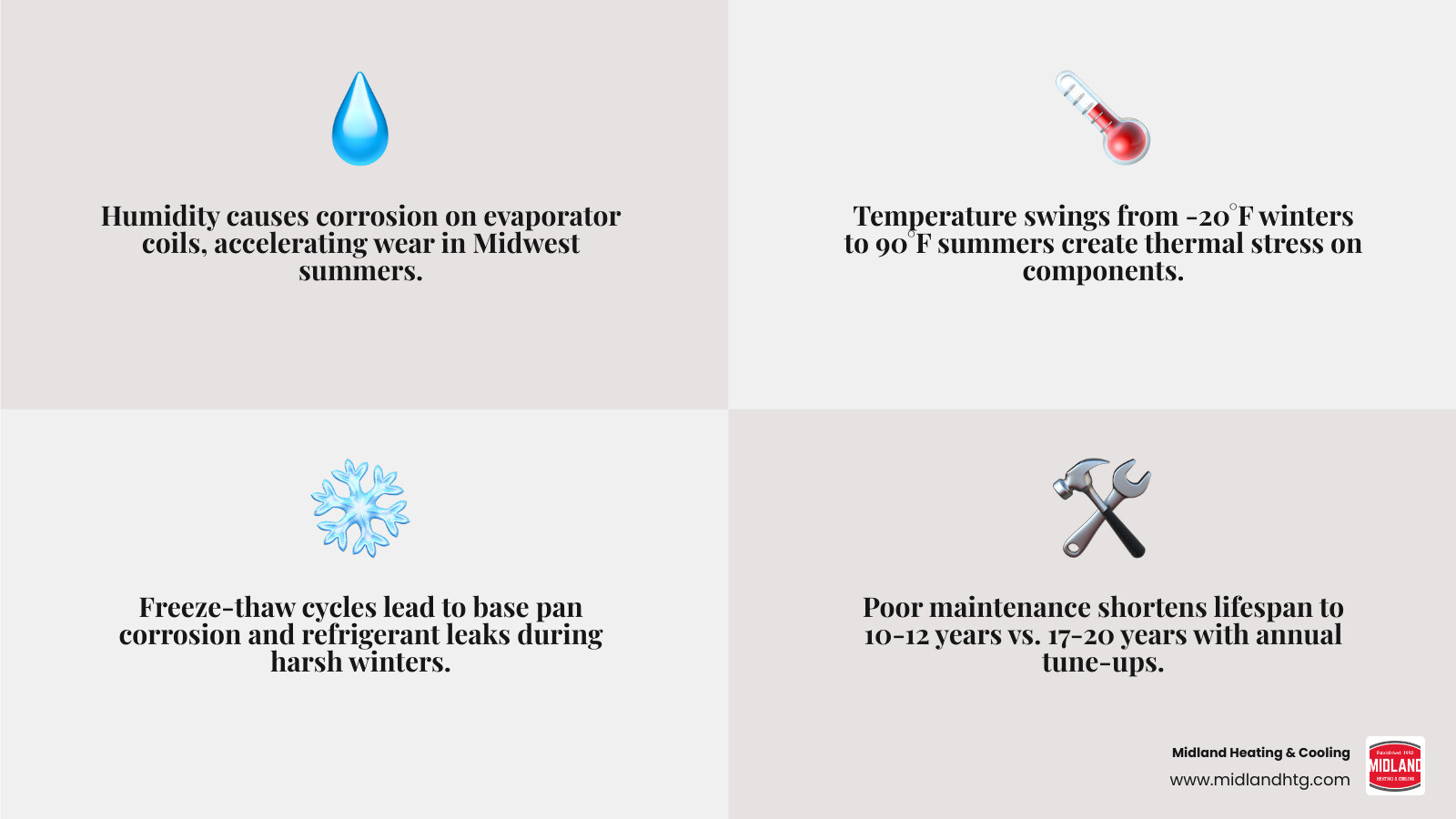
One of the biggest silent killers of AC units in Edina and Minnetonka isn’t the heat — it’s the winter. When an AC unit sits idle for six months, it is exposed to extreme sub-zero temperatures followed by brief thaws. This “freeze-thaw” cycle can cause moisture to get trapped in the base pan or between the fins of the condenser coil. When that water freezes, it expands, potentially warping the delicate aluminum fins or stressing the copper refrigerant lines.
Thermal Stress Compression
The transition from a 30-degree spring morning to an 85-degree afternoon is common in the Midwest. This rapid change forces the metal components of the AC unit to expand and contract quickly. Over 15 years, this “thermal stress” can lead to microscopic fractures in the coils, eventually resulting in refrigerant leaks.
Understanding the Central Air Installation Process is helpful here, as professional installers in the Twin Cities know to elevate the outdoor unit on a proper pad to keep it away from standing water and heavy snow accumulation, which helps mitigate some of these environmental risks.
How Humidity Impacts the Average Lifespan of a Central Air Conditioner in a Midwest Climate
In the Midwest, humidity isn’t just a comfort issue; it’s a mechanical one. High humidity levels in places like Bloomington and Eden Prairie force your AC to work double duty. The unit must remove moisture from the air before it can effectively lower the temperature.
This leads to several longevity issues:
- Evaporator Coil Corrosion: When humidity levels are high, the evaporator coil stays wet for long periods. This constant moisture can lead to “formarytic corrosion,” which creates pinhole leaks in the copper tubing.
- Short-Cycling: If a unit is oversized for the home, it will cool the air too quickly without removing enough humidity. This causes the unit to turn on and off frequently (short-cycling), which puts immense strain on the compressor — the most expensive part of the system.
- Drainage Issues: High humidity means more condensate water. If the drainage system isn’t managed correctly, it can lead to mold growth or water damage within the unit. Solving Drainage Issues Central Air Installation is a vital part of protecting the internal components from rust and premature failure.
Maintenance Strategies for the Average Lifespan of a Central Air Conditioner in a Midwest Climate
If there is one “secret” to extending the average lifespan of a central air conditioner in a Midwest climate, it is annual maintenance. We often tell our neighbors in Wayzata and Excelsior that an AC unit is like a car: you wouldn’t drive a vehicle for 15 years without changing the oil, yet many people expect their AC to run for two decades without a tune-up.
Regular maintenance can extend a unit’s life by 3 to 5 years, while total neglect can shorten it by the same amount. Here is what a proactive maintenance strategy looks like:
- Airflow Optimization: A dirty air filter is the “silent killer” of HVAC systems. It forces the blower motor to work harder, increasing heat and wear. Filters should be checked monthly and replaced every 1 to 3 months.
- Coil Cleaning: Outdoor condenser coils get clogged with cottonwood seeds (a major Minnesota nuisance!), dust, and grass clippings. This debris acts like a blanket, trapping heat inside the unit and forcing the compressor to run hotter and longer.
- Professional Inspections: There are significant Benefits Of Hiring Professionals Central Ac for an annual “check-up.” A technician can spot a failing capacitor or a small refrigerant leak before it turns into a catastrophic compressor failure.
- Debris Removal: Maintaining a 2-foot clearance around your outdoor unit is essential. Trimming back shrubs and clearing away fallen leaves ensures the unit can “breathe” properly.
Warning Signs Your Cooling System is Nearing Retirement
As we move through May 2026, many homeowners are starting to fire up their systems for the first time this year. If your unit is over 12 years old, keep a lookout for these red flags. Most systems don’t fail overnight; they give you warnings that they are entering their “twilight years.”
- The “One-Two Punch” of Repairs: If you find yourself calling us for a repair in June, and then another one in August, your system is likely experiencing cascading component failure.
- Rising Energy Bills: If your utility bills have increased by 15% to 20% compared to previous summers, but your usage habits haven’t changed, your AC is likely losing its efficiency. It’s working harder to produce the same amount of cooling.
- Strange Noises: Squealing, grinding, or loud banging sounds often indicate a failing blower motor or a compressor that is nearing the end of its life.
- Weak Airflow or Warm Air: This could be a sign of a dying compressor or a significant refrigerant leak. If the air coming out of your vents isn’t crisp and cold, the system is struggling.
- Frequent Cycling: If the unit turns on and off every few minutes, it’s a sign that it can no longer maintain the “load” of the house efficiently.
If you are unsure how old your system is, you can usually find the manufacture date on the nameplate of the outdoor unit. If it’s not explicitly stated, the serial number often contains the date (the first four digits usually represent the week and year). Knowing your system’s age helps you understand What To Expect When Upgrading To Central Air when the time eventually comes.
The Decision Framework: Repair vs. Replacement
Deciding whether to sink money into an old unit or invest in a new one is the most common dilemma we see in St. Paul and Hopkins. To help, we use a few industry-standard “rules of thumb.”
The 50% Rule
If the cost of a single repair is more than 50% of the price of a brand-new system, replacement is almost always the smarter financial move. This is especially true for units over 10 years old that are out of warranty.
The $5,000 Rule
Multiply the age of your system by the cost of the repair. If the result is greater than $5,000, it is generally recommended to replace the unit. For example:
- An 8-year-old unit with a $400 repair = $3,200 (Repair it)
- A 12-year-old unit with a $600 repair = $7,200 (Replace it)
The Refrigerant Factor
If your unit was installed before 2010, it likely uses R-22 (Freon). As of 2020, the production of R-22 was banned. While we can still service these units, the cost of recycled refrigerant has skyrocketed. Investing in a major repair for an R-22 system is often a “false economy” because the parts and the gas are becoming increasingly difficult and expensive to source.
Energy Efficiency Gains
Modern units now start at a minimum of 14 or 15 SEER2. If you are replacing a 15-year-old unit that was likely a 10 SEER when it was new (and is now operating at an 8 SEER due to age), a new system can cut your cooling costs by 20% to 40% immediately. Following the Key Steps In Central Air Installation ensures you actually see those savings on your bill.
| Factor | Repair | Replace |
|---|---|---|
| Age | Under 10 years | Over 15 years |
| Repair Cost | Less than 30% of new unit | More than 50% of new unit |
| Refrigerant | R-410A | R-22 (Freon) |
| Efficiency | Still meets your needs | Monthly bills are spiking |
| Comfort | Even cooling | Humidity feels high; hot spots |
Frequently Asked Questions about Midwest AC Lifespans
Can a central air conditioner last 30 years in Minnesota?
While it is technically possible, it is extremely rare. We occasionally see “unicorn” units in places like Edina that have reached 30 years, but they are almost always in homes where the owners performed meticulous annual maintenance and kept the thermostat at a very conservative 78 degrees. Even then, a 30-year-old unit is a liability. It is likely using massive amounts of electricity and could fail at any moment, leaving you in a lurch during a heatwave.
What is the most common cause of AC failure in the Midwest?
The most common “terminal” event is compressor failure. Because our summers are so humid, compressors often have to work through high “head pressures” to move heat. If the coils are dirty or the unit is low on refrigerant, the compressor overheats and eventually burns out. Coil corrosion due to humidity is a close second, leading to leaks that make the system uneconomical to repair.
Does winter weather shorten the life of my air conditioner?
Yes, but not in the way most people think. It’s not the cold itself that hurts the unit, but the physical accumulation of snow and ice. Heavy ice falling from your roof can crush the fan cage, and snow sitting in the base pan can lead to rust and corrosion. We generally recommend against “wrapping” your unit in a plastic tarp, as this traps moisture inside and creates a home for rodents who might chew on the wiring. Instead, use a breathable cover or simply a piece of plywood on the top to protect it from falling ice.
Conclusion
Navigating the average lifespan of a central air conditioner in a Midwest climate requires a balance of proactive care and realistic expectations. While we all want our appliances to last forever, the reality of Minnesota’s weather means that after 15 years, most systems are on borrowed time.
At Midland Heating & Cooling, we’ve been a local, family-owned fixture in the Twin Cities for over 70 years. We know the specific challenges that homes in Minneapolis, Bloomington, and Minnetonka face. Whether you are looking to squeeze a few more years out of your current unit through a professional tune-up or you are ready to explore a high-efficiency replacement, our certified technicians are here to help with 100% customer satisfaction.
Don’t wait for the first 90-degree day to find out your AC has reached the end of its journey. Schedule your professional central air conditioning assessment today and let us help you stay cool all summer long.